


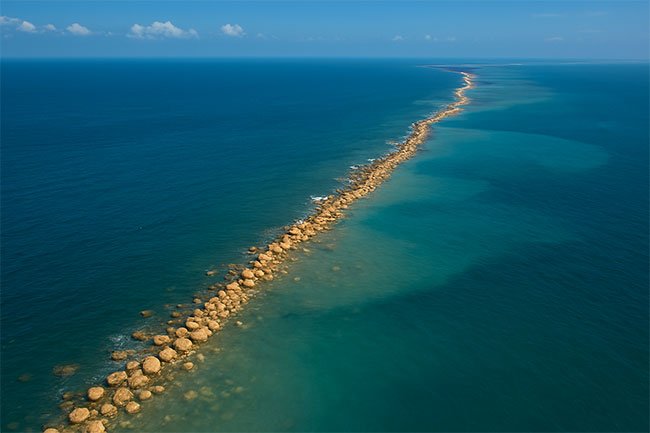
Ram Setu, also known as Adam’s Bridge, has fascinated people for centuries. It is often described as a chain of limestone shoals stretching between India’s Rameswaram and Sri Lanka’s Mannar Island. For many, this bridge is not just a natural formation but a sacred reminder of the Ramayana, where it is believed that Lord Rama’s Vanara Sena built this path to reach Lanka. Over time, a mix of legends, stories, and scientific theories has made Ram Setu one of the most discussed ancient structures in India.
Table of Contents
What is Ram Setu?
Ram Setu is a long chain of stones and sandbanks spread across the shallow sea near the southern tip of India. It stretches roughly 30 kilometers. The structure is visible from satellite images, which increases curiosity about whether it was shaped naturally or built intentionally. In Hindu tradition, Ram Setu is seen as a bridge constructed so that Lord Rama and his army could cross the ocean during their mission to rescue Goddess Sita.
Ram Setu in the Ramayana
In the Ramayana, the construction of Ram Setu is described as a massive effort by the Vanara Sena under the guidance of Lord Rama and the engineering brilliance of Nala. The story says that the stones used in the bridge floated on water due to Rama’s name being inscribed on them. This part of the epic has been retold for generations, and even today, many devotees believe the bridge stands as proof of this ancient event.
Historical Mentions
Ancient texts and travel records refer to a land connection between India and Sri Lanka. Early maps created by European explorers also pointed to a visible structure in the ocean. Many Indian scriptures mention Setubandha, suggesting that the existence of this bridge has been known for thousands of years. These references support the notion that Ram Setu may have played a significant role in ancient travel and trade routes.
Scientific View on Ram Setu
Scientists describe Ram Setu as a natural formation created over thousands of years through the accumulation of sediment, coral reefs, and sandbanks. According to geological studies, the region is shallow and prone to natural buildup of rocks and sand. However, some researchers argue that certain formations appear aligned in a way that seems unusual for a completely natural structure. This difference of opinion keeps the debate alive.
Mythology and Faith
For devotees, Ram Setu is not just a physical structure but a symbol of devotion, courage, and divine assistance. Many believe that its presence confirms the historical nature of the Ramayana. Some even say that the energy in the area feels spiritually uplifting. Pilgrims who visit Rameswaram often look out toward the sea, imagining the ancient army marching across the waters.
Ram Setu Today
Ram Setu continues to be a topic of religious, historical, and scientific interest. Its preservation has been the subject of many discussions, especially related to maritime projects like the Sethusamudram Project. Many people feel that the bridge should be protected as a heritage site due to its cultural and spiritual significance. Whether viewed through faith or science, Ram Setu remains an important part of India’s story.
Conclusion
Ram Setu stands at the intersection of legend and geology, devotion and curiosity. It represents a beautiful blend of history, faith, and natural wonder. Whether seen as a divine creation or a natural formation, the bridge inspires countless people, reminding them of the timeless stories that shaped the culture of this land.
You may also like to read –
