


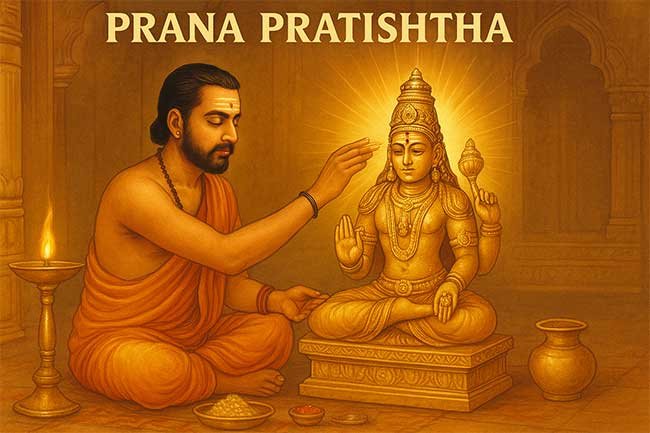
If you have ever visited a temple or witnessed a murti installation ceremony at home, you might have heard the term Prana Pratishtha. Many people bow to an idol because they believe divine energy is present in it, and it’s this ritual that brings spiritual consciousness into the murti. Without Prana Pratishtha, a statue is only a piece of stone or metal. But after the ritual, it becomes a sacred symbol of devotion and faith.
Table of Contents
What is Prana Pratishtha?
Prana Pratishtha is an ancient Hindu ritual in which life force energy (prana) is ceremonially invoked into a deity idol, making it spiritually “alive.” The word is formed from two Sanskrit terms:
• Prana – the cosmic life energy
• Pratishtha – installation or establishment
So, Prana Pratishtha means establishing the divine presence in the idol. It is believed that during the ritual, the divine consciousness of the deity descends into the murti, making it fit for worship.
Why is Prana Pratishtha Important?
The purpose of worship is to connect with the divine at the heart level. A murti becomes a focal point to express devotion, gratitude, meditation, and surrender. The ritual:
• Turns the idol into a sacred living representation of the divine
• Helps devotees build a deeper emotional and spiritual bond
• Creates a sacred space charged with positive vibrations
For many people, after Prana Pratishtha, the idol becomes more than an object – it becomes a guide, protector, and a spiritual companion.
Where is Prana Pratishtha Performed?
Prana Pratishtha can be done:
• In temples, when a new deity idol is installed
• In homes, when installing a murti for daily worship
• During festivals like Navratri or Ganesh Chaturthi
• In Ashrams or spiritual centers
The ritual is usually performed by trained priests who chant mantras from the Vedas and Agamas according to a specific process.
How Prana Pratishtha is Done (Simple Overview)
The complete procedure can be very elaborate, but the simplified sequence generally includes:
• Purification of the space and the idol
• Invocation of gods and goddesses through Vedic mantras
• Nyasa, where the priest symbolically touches various parts of the murti to energize them
• Establishing prana through pranayama and mantra chanting
• Offering flowers, clothes, ornaments, and bhog to the deity
One of the most important steps is opening the eyes of the idol (netronmeelan), symbolizing the awakening of divine consciousness.
Can Prana Pratishtha Be Done Without a Priest?
Traditionally, it is done by priests, but many people perform a simpler version at home by praying with a pure heart and chanting the deity’s main mantra. The intention and devotion matter more than complexity.
Is Prana Pratishtha Permanent?
In temples, it is considered permanent because daily rituals (nityaseva) maintain the divine energy. At home, regular worship, lighting a lamp, chanting mantras, and offering water or flowers keep the divine vibration active. If worship stops completely for a long time, the energy gradually becomes dormant.
Prana Pratishtha is not just a ritual; it is a beautiful expression of love and devotion. It allows us to feel the presence of the divine in a physical form that we can see, decorate, talk to, and pray to. It brings spiritual comfort, peace, and faith into the lives of devotees.
You may also like to read –
